
Summary
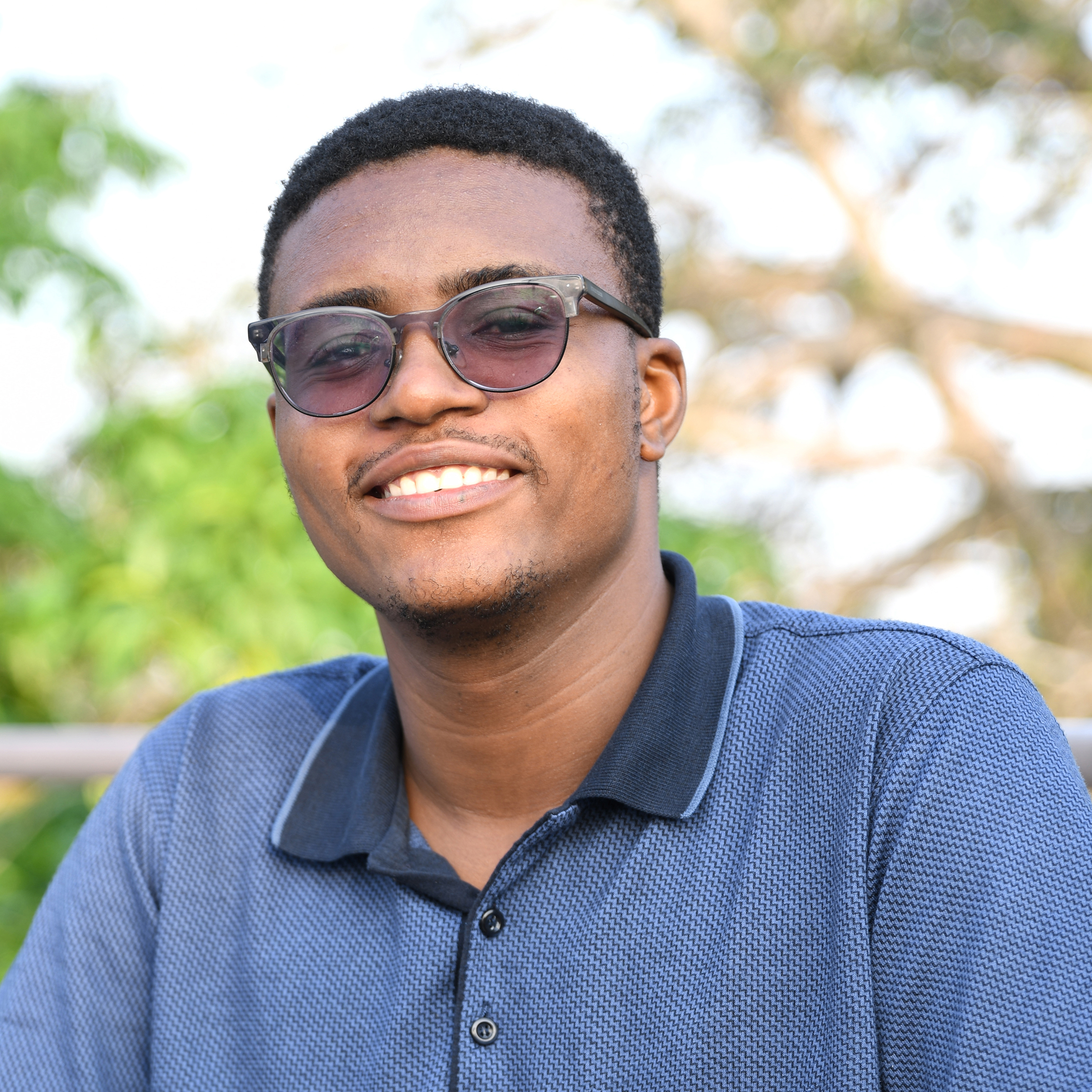
One opportunity changed the trajectory of a young student’s life. Seven years later, Clement is a Master’s Fellow. His journey reflects the long-term impact of investing early in talent, nurturing it through mentorship, and cultivating the next generation of African scientists who will lead research that changes lives. Clement’s story is more than an individual success. It demonstrates how deliberate investment in young talent creates lasting impact, building a pipeline of African scientists whose research, leadership, and innovation will shape stronger health systems and improve lives across the continent for generations to come.
When Clement finished high school in 2018, he knew that he enjoyed science, but he had little sense of what a career in science could actually look like. His school had limited laboratory facilities, and opportunities to interact with scientists or experience research outside the classroom were rare. Like many young people with an interest in science, the ability was there, but the exposure was missing. He had not yet had the opportunity to see how research was conducted, the people behind it, or the different careers that could grow from an interest in science.
That opportunity came when, at 18, Clement was selected to join the School Leavers Attachment Scheme (SLAS) at the KEMRI-Wellcome Trust Research Programme (KWTRP). SLAS introduces competitively selected recent high school graduates to science and STEM careers through a three-month attachment, during which they rotate across departments and receive mentorship from scientists and other research professionals. For Clement, entering KWTRP was his first meaningful encounter with a working research environment. He was suddenly surrounded by people asking scientific questions, conducting experiments, analysing evidence and working together to address health challenges affecting communities in Kenya and beyond.
The experience changed the way Clement understood science. What had previously existed largely in textbooks became something practical and within reach. He could talk to scientists, observe their work, and begin to understand the many different roles involved in research. Perhaps most importantly, he could begin to imagine himself becoming part of that world. The attachment did not give him a complete career plan, nor did it need to. It gave him something more fundamental at that stage of his life: an opportunity to see what was possible.
One opportunity opened the door to another
Clement’s experience with SLAS did not end when the three-month attachment came to a close. It became the beginning of a series of opportunities that continued to broaden his understanding of science and his place within it. After the attachment, he was selected to attend the 59th London International Youth Science Forum at Imperial College London, a two-week gathering that brought together young people interested in science from around the world.
For someone who had only recently left high school, the experience expanded Clement’s world considerably. He met young people from different countries, encountered new scientific ideas and saw how people from different backgrounds and disciplines could come together around common problems. He began to appreciate that science rarely happens in isolation. The health challenges facing communities are complex, and addressing them requires people who can work across disciplines, institutions and countries, sharing knowledge while bringing different perspectives to the table.
This early international exposure also introduced Clement to something that would become an important part of his development as a scientist: the idea that being a researcher involves more than technical competence. Scientists are part of communities, institutions and societies, and the knowledge they generate has to connect with the world around them. This understanding would become much more tangible when Clement later had the opportunity to work directly with young people in his own community.
Connecting science with communities
In 2020, Clement joined a Wellcome Trust-funded project raising awareness of antimicrobial resistance among young people in Kilifi County. The experience brought science closer to home. Instead of only learning about research within an institution, he was now seeing what it meant to communicate scientific information in ways that people could understand and use. Antimicrobial resistance is a complex global health problem, but addressing it also depends on how well researchers and health professionals engage communities, listen to their experiences, and make scientific knowledge meaningful in everyday life.
For Clement, this experience strengthened his understanding of the relationship between science and society. It also reflects the DELTAS Africa pillar of scientific citizenship, which recognises that researchers have responsibilities that extend beyond producing publications or working in laboratories. African scientists need to engage communities, communicate evidence, collaborate with others, and contribute to conversations about the health and development challenges affecting the continent. Clement was beginning to experience this responsibility early in his journey, not as an abstract concept, but through direct engagement with young people in Kilifi.
By this point, the young school leaver who had first entered KWTRP curious about science was gradually developing a much richer understanding of what being a scientist could mean. His experiences were building on each other. The laboratory exposure had shown him how research worked, the international forum had shown him the importance of collaboration, and the antimicrobial resistance project had shown him why research must remain connected to the people and communities it ultimately seeks to serve.
Returning to KWTRP with a different purpose
Five years after his first SLAS attachment, Clement returned to KWTRP in 2023, but this time at a very different stage of his journey. He had completed his undergraduate degree and returned as a Postgraduate Diploma student at Pwani University, supported through the Initiative to Develop African Research Leaders (IDeAL), part of the DELTAS Africa programme supported by the Science for Africa Foundation. The institution that had first introduced him to research was now providing an environment in which he could begin developing as a researcher himself.
During his postgraduate training, Clement was attached to the Improving Hypertension Control in Rural Sub-Saharan Africa (IHCoR) project, where he gained first-hand experience of implementation research. This gave him the opportunity to understand some of the questions that arise when researchers try to improve health in real-world settings. Producing evidence is important, but so is understanding whether interventions can work within existing health systems, how communities experience them, and what needs to change for research findings to translate into better health outcomes.
This stage of Clement’s journey speaks strongly to the DELTAS Africa pillars of research training and scientific quality. Developing African research leadership requires more than classroom learning or academic qualifications. Young researchers need opportunities to work alongside experienced scientists, participate in active research, learn how to ask meaningful questions, and develop the skills needed to produce rigorous evidence. Through his postgraduate training and involvement in IHCoR, Clement was able to move from observing research to taking a more active role in the research process, while developing skills within a programme committed to addressing health priorities relevant to African populations.
From early exposure to advanced scientific training
Today, Clement is pursuing a Master’s degree in Bioinformatics at Pwani University, fully funded by the Gates Foundation in collaboration with the Kenya AIDS Vaccine Initiative. It is a significant step from where his journey began. Seven years earlier, he was an 18-year-old school leaver coming from a school with limited laboratory facilities and little exposure to health research. Today, he is developing advanced skills in bioinformatics, a field that is becoming increasingly important in understanding biological data and addressing complex biomedical and health research questions.
What stands out about Clement’s journey is that there was no single intervention that carried him from high school to postgraduate research. His development happened gradually, through opportunities that came at different stages and met different needs. SLAS provided the first exposure. Scientists and mentors helped him understand what a research career could look like. The London International Youth Science Forum widened his horizons. Community engagement allowed him to understand the social responsibility that comes with science. His postgraduate training gave him structured research experience, and his master’s training is now allowing him to develop deeper scientific expertise.
This continuity speaks to the DELTAS Africa pillar of research management and environment. Talented researchers do not develop in isolation. They need institutions that can identify potential, mentors who are willing to guide them, partnerships that create opportunities, and training pathways that allow people to progress from one career stage to the next. Clement’s journey shows the importance of building an environment where a young person can enter through a programme such as SLAS and, several years later, still find opportunities to learn, contribute and grow.
A journey that tells a bigger story
Seven years after Clement first walked into KWTRP as an 18-year-old school leaver, that first opportunity continues to bear fruit. He has moved from being introduced to science, to engaging communities around a public health challenge, to participating in implementation research and now to advanced training in bioinformatics. His journey captures what sustained capacity development can achieve: not simply supporting someone through one attachment or one qualification, but creating a pathway through which promising young Africans can grow into scientists with the skills, experience and confidence to contribute to Africa’s research future.